

So we’ve recently shared how and why we became fascinated with wine, now let’s talk about the fundamentals of wine itself and how a grape goes from a “happy little grape” (to channel the late Bob Ross), to that glorious nectar we all know as wine.
To oversimplify, wine is fermented grape juice. Yeast converts the sugars in grape juice into alcohol and carbon dioxide. That’s it, right? Well, not quite.
Good wine is the end product of a long, arduous process of growing and maintaining vines, selecting the best fruit from those vines for harvest at just the right moment, separating the grape berries from the stems, crushing/pressing to extract the juice, fermenting the juice in a controlled environment, stopping the fermentation, stabilizing the wine or aging the wine in barrels or tanks for some time, clarifying or filtering the wine, bottling the wine, and stabilizing again in bottles. Then and only then is it sent to the consumer through distributors. Depending on the style of wine, every step of this oversimplified process can and is modified to meet the winemaker’s desired goal. Not so simple anymore right?

Fruit Selection / Harvest. To make the most affordable wines and maximize output, some wineries use all of their grape yield (those without significant defect of course, or at least one would hope). Wineries making higher quality wines or wineries in regions with government controlled quality mandates, choose or are actually required to select only the best grapes in their winemaking. For example, a winery crafting Brunello di Montalcino will return many of the grape clusters back to the earth by “green pruning” less than ideal fruit. For Brunello di Montalcino, only around 68 percent of the fruit is selected to make their wine. The quantity of wine produced is lower but the quality is higher. As a result, the price of the wine is generally much higher. We’ll discuss other factors that contribute to pricing of wines at a later date.
The Crush: White vs Red Wine. White wine is primarily made from white grapes but can also be made from red grapes. The color of the wine comes from the skins of the grapes. When a red grape such as Pinot Noir, Zinfandel or Tempranillo is crushed and the juice is not left in contact with the skins, the juice will remain white. A Champagne Blanc de Noirs (pronounced blahnc-de-NWAHR, literally translated as “white of blacks”) is also made in this fashion. Red wine, on the other hand, comes only from red grapes.
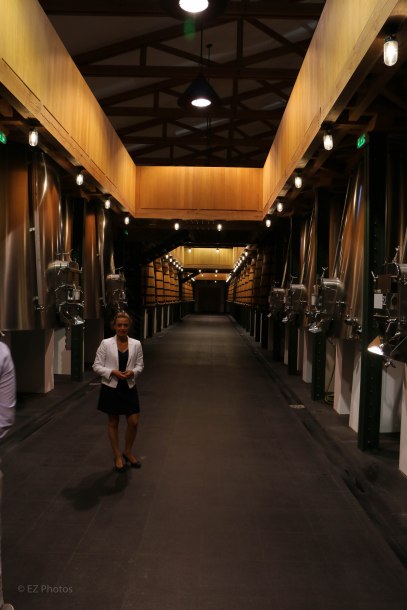
Fermentation. Yeast is added to the juice to begin the fermentation process. In red wines the juice is left in contact with the grape skins to macerate during fermentation to acquire the winemaker’s desired depth of color, flavor, aroma, and tannin structure. As wine ferments, the skins, pulp and seeds rise to the top of the vat and form a hard “cap”. Pumping over (remontage in French) is a process whereby the juice from the bottom of the fermentation tank is pumped over the top of the cap to increase the wine’s contact with the skins. Alternately, winemakers may choose to “punch down” the cap rather than pump-over. These processes are typically done multiple times a day. Check out this Wine Spectator video to see both processes in action: Hard Labor: Punch Down vs. Pumping Over.
To also help visualize, imagine a French Press coffee maker. When you add water to the coffee, the grounds rise to the top and form a “cap” of grounds. When you press the coffee you are essentially “punching down” the grounds. Stepping away from the analogy, winemakers may choose to punch down wines to extract stronger tannins and flavor structures as it is a more forceful process. Pumping over is a gentler process and generally used for thicker skinned grapes like Cabernet Sauvignon.
Aging/Maturing. After fermentation, the winemaker may transfer the wine to a different vessel such as oak barrels to begin the aging process. Sometimes during the aging process, the winemaker may choose to allow a secondary fermentation. This secondary fermentation can be used to convert the wine’s harsher malic acid (which you may taste as green apple), to softer lactic acid (which you may taste or smell as buttery or creamy notes). This process, called malolactic fermentation (MLF), is a biochemical process carried out by bacteria and also happens to be one of every wine nerd’s (to include this wine nerd’s) favorite buzzwords. You’ll likely hear this term at 4 out of 5 wine tastings.

In the case of Champagne or other sparkling wines that use the “Méthode Champenoise” (the traditional sparkling wine method used in Champagne), a secondary fermentation takes place in the bottle, making the sparkling wine, well, bubbly!
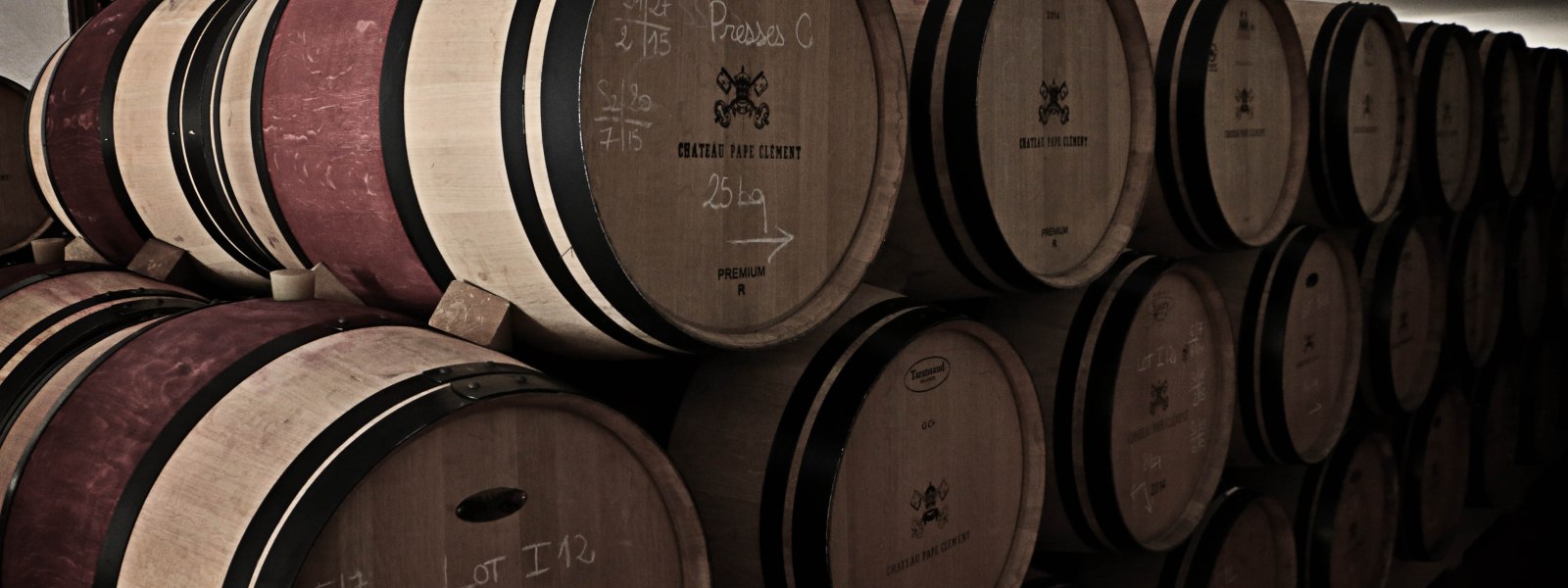
Barrels. For barrels, winemakers choose between numerous types of oak; French, Hungarian, Slovenian, or American. They decide, or governmental rules dictate, whether new or old oak barrels will be used. Then the winemaker decides whether he or she wants a barrel with dark, medium plus, medium or light toast. The toast level refers to the amount the barrel is fired. The type, age, and toast levels of the oak barrels determine the intensity of the secondary aromas and flavors such as vanilla, marshmallows, toast, cream, caramel, smoke, spice or oaky notes. New barrels impart stronger oaky notes and tannins. Older barrels (those used for a previous vintage) impart less intensity.

Bottling. After all fermentation is complete and the wine has been aged as appropriate, the wines are blended, clarified or filtered, and prepared for bottling. Winemakers or, again, governmental rules dictate what type of bottles will be used and what type of closure will be used; cork in all its natural or artificial varieties or screwtop closures. The wine is then left to stabilize for a certain time and then labeled and sent for distribution and sale. Phew…

It may be hard to believe but I’ve still generalized this process…a lot! So please stop back as we examine specific wines and regions in more detail. Winemaking is a long, challenging process with so many variables and decisions to be made along the way. How can you not appreciate it and want to learn more? -EZ
Sources:
- Wikipedia, “Malolactic fermentation”
- Kolpan, Steven, Brian H. Smith and Michael A. Weiss. Exploring Wine: Completely Revised Third Edition, The Culinary Institute of America, New Jersey: John Wiley and Sons, 2010.
- Puckette, Madeline and Justin Hammack. Wine Folly: The Essential Guide to Wine, New York: Penguin Random House, 2015.
- Wine Spectator: Hard Labor 7: Punchdown vs.Pumpover https://www.youtube.com/watch?v=GG7XpBpF1cY
 The Vine and Thistle
Fabulous breakdown. I remember when you told me about the skins of the grapes and how they play into the wine. Also, I want some wine now!
LikeLike
Great summary, thanks for sharing.
LikeLike