
Now that Spring has arrived, my mind turns to thoughts of Tuscany. Whenever I am asked to single out my favorite place in Europe, it is sometimes hard to say as each country, city, and village are so unique. But then I go to Tuscany in my mind, and if there is a place in heaven for me I hope it resembles Tuscany. To me, Tuscany is heaven on earth…
There are few experiences that can compare to waking up on a cool spring morning in a beautifully restored Tuscan villa and looking outside to see the rolling hills of Chianti covered in rows of Sangiovese vines, olive and fruit trees. Sipping a cup of fresh brewed Lavazza d’Oro coffee, I look across some of the most beautiful country there is.
We are renting a villa with my wife’s family in the town of Bucine, right in the heart of the Chianti Classico region an hour south of Florence and 45 minutes north of Siena. Our villa’s foundations and stone walls date back to the 16th Century, as Marco says, a time when building materials were literally taken from the ground on which the villa was built. Marco’s family owns the villa and like the stones in the walls, was born of Chianti and Tuscany. The personal connection to the land is pervasive throughout many wine regions, but for some reason always seems more apparent in Tuscany.
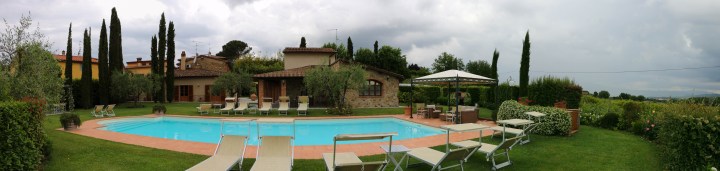
The day of our arrival, Francesco, the villa rental manager, and Marco tour the villa’s grounds with me. With aromas of honeysuckle, roses and flowering olive trees everywhere, we stop at the cherry tree loaded with ripe cherries. Anything on the property is ours for the taking, as Marco explains. We walk back past the chicken coop, whose seemingly happy hens cluck away. They will provide us with fresh eggs for breakfast throughout the week. The garden’s lettuce is also ready should we need any leaves for a fresh salad. The tomatoes betray a plentiful yield to come, but it is far too early in the season to enjoy. The same goes for the peppers and garlic. Lemons fall off the potted trees, which my father-in-law quickly turns into delicious lemonade. The whole experience is supremely relaxing; an almost sublime transition from the worries of a hectic and chaotic world.


We sat down that evening for incredible welcome feast of various crostini, local Italian charcuterie and cheeses, pasta al amatriciana, crispy roasted potatoes and fresh leafy salad served with roasted pork, all served with ubiquitous amounts of the villa’s own sangiovese. We finished with the creamiest tiramisu I’ve ever had. We talked, laughed, ate, drank and truly were merry.
As we retired for the night, my thoughts turned to the wine tour my wife and I organized for our family. In order to get a good sample of Tuscany’s wine region, we put together an itinerary to visit a winery in each of Italy’s “Big 3” wine regions. After three days touring Florence, Siena, Pisa, and Lucca it was time to highlight the wine masterpieces of Chianti Classico, Montepulciano, and Montalcino.
Our wine day started somewhat early as we arrived at Fèlsina, a winery in the Chianti Classico DOCG, for our 10:00 am tour and tasting. As we wandered the grounds in eager anticipation for our tour to begin, we were warmly greeted by Carlotta, our guide. Carlotta showed us through the barrel room, in a building built in the 18th century and connected to the cellars via underground tunnels excavated in the 19th Century.


As the tour ended we were escorted into the comfortable enoteca where a tasting table for 12 was set for us. As we settled in, plates of charcuterie, cheeses and bread drizzled with Fèlsina’s own olive oil were brought to us in preparation for the tasting. We started with I Sistri, Fèlsina’s white wine made of 100% Chardonnay. It was crisp, fruity with only hints of butter, quite refreshing with excellent structure and balance, pairing well with the pecorino cheeses. Next we moved on to the Chianti Classico, followed by the Rancia, a Red Chianti Classico Riserva that takes its name from an old farmhouse that was once a Benedictine monastery. The Rancia was a deep red, full-bodied wine with good tannins spice, berries and even some floral and toasty notes. It was delicious with the Italian meats.
We departed Fèlsina with our case of wine and a few bottles of olive oil, and made our way to Montepulciano for a 12:30 tasting at Poliziano’s Enoteca on Montepulciano’s Piazza Grande. The route from Fèlsina to Motepulciano was winding, sometimes a little rough, but always beautiful, offering a small preview of the scenic hilltowns we would later see on the drive from Montepulciano to Montalcino.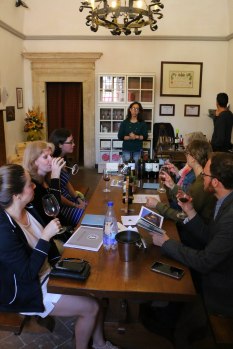 We were greeted at Poliziano’s Enoteca by Giulia who led us through a tasting of Poliziano’s fine selections. So as not to be rushed during our tasting, Giulia called ahead to the Osteria del Conte where we had lunch reservations to let them know we might be a little late. We were told there was no problem. Of course there was no problem, because time is such a relative thing in Italy. We continued to enjoy the Vino Nobile and the “Asinone,” named after the single plot where the sangiovese for the wine is grown and its resemblance to a “donkey’s belly” on a map. Of course the whole experience ended too quickly, but it was time to move on and the day held plenty more to savor. (Check out Azienda Agricola Poliziano here.)


Departing Poliziano, we headed to Osteria del Conte in time for our 1:20 lunch reservations. Strolling across the Piazza Grande in front of the Palazzo Comunale (a building fans of the Twilight saga and the Netflix series, Medici: Masters of Florence, will quickly recognize) we take in the fresh air and medieval architecture freshly rinsed by a passing shower.
Arriving at Osteria del Conte we are greeted yet again with the warmest of hospitality that at this point seemed so routine in this slice of the world.Our table awaited and we all sat down for a delightful lunch of traditional Tuscan recipes. I start with assorted crostini with the commonly recognized bruschetta of diced tomatoes and drizzled olive oil, a melted local cheese, and the crostini de fegatini, a local liver paté that can be found throughout the region. I shared a bottle of Rosso di Montepulciano with family. Some in our party opted for the lamb chops, some for the pici pasta with ragu. 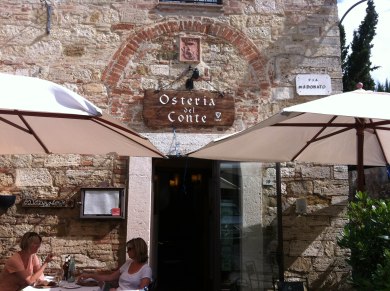 I chose the duck ragu and pici pasta. All the dishes brought to the table were presented simply; no flourishes, no fluff, just quality ingredients and plating. Tuscan cuisine constantly reminds that with quality ingredients and proper preparation, ornamental excess is completely unnecessary. At Osteria del Conte, the food is simple, affordable and absolutely delicious; the food speaks for itself. There was not a single disappointing dish anywhere on the table. (Check out Osteria del Conte here.) Again missing a passing downpour and with our bellies full, we head back to our cars, designated drivers ready to head to our last stop.
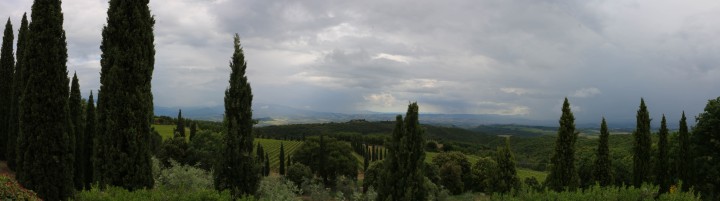
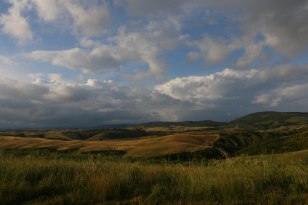
The drive from Montepulciano to Montalcino is beyond words. Breathtaking would be a good start in describing it, but that is not enough. Imagine every painting or postcard you have seen of the Tuscan countryside and the drive is a perpetual slideshow of those visions. Romantic hillside towns, rolling hills of wild flowers, wheat just transitioning from vibrant green to gold, olive trees and vines compliment the blue skies peaking through large, fluffy cumulus. One would expect hotels and villas everywhere in this paradise. But not even the slightest hint of urban sprawl could be seen, the result of Italian government regulation on development and seemingly sheer isolation. Occasionally you are brought back down to earth and reminded of the hard economic times in Italy. With old farmhouses for sale, empty or unfinished industrial sites and warehouses, you are left to wonder what the final straw was that forced its inhabitants to abandon such a locale. Occasionally there is the thriving marble or travertine quarry with large slabs stacked on lots in the shadow of the exposed hill faces from whence the inventory came.
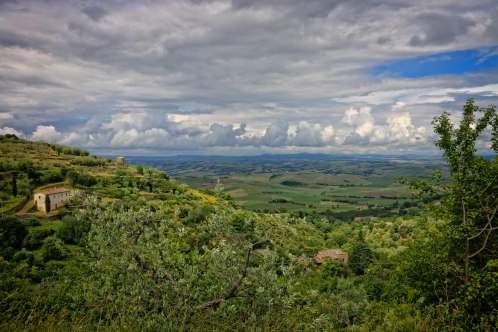
We wind through the hills gaining elevation as we approach Montalcino, the land of Brunello, king of Italian wines. After snapping some photos along the way, capturing whatever we could, we arrive at Poggio Antico just avoiding yet another spring shower. We have an appointment for a tour and tasting, and our guide Giulia warmly greets us with a big smile. Given time to refresh after our drive, we meander through the bottling room to reach the restrooms, both of which were impeccably clean. Poggio Antico served as an interesting contrast to our morning visit to Fèlsina which had a more traditional, old school feel to it compared to Poggio Antico’s greater incorporation of technology into its winemaking practices. Friendly and fun, Giulia starts our tour outdoors as it begins to rain. She shares the winery’s history with us and explains the unique elevation of Poggio Antico within Montalcino DOCG as we look over the vineyard, the Tyrrhenian Sea barely visible in the far distance beyond the hills. The elevation of around 1,480 feet and steady breezes play a key role in helping to keep the grapes free of moisture that would result in mold.
We move inside to the room housing the computer controlled fermentation tanks used to adjust temperature and ensure consistent temperature in the tanks. Continuing onward, we head to the cellars where the Brunello di Montalcino (100% Sangiovese) wines mature in Slavonian and French oak tonneaus and barriques for a period of 3-5 years before bottling and subsequent 18 months of bottle aging. As wine ages in the barrel, it slowly evaporates through the barrel, resulting in what is commonly referred to as the angels’ share.  At Poggio Antico, however, the angels are left wanting thanks to a humidification system that maintains a higher humidity in the barrel cellar, reducing the amount of wine that evaporates through the oak. When the wine moves on to bottling, the bottles are corked with 100% natural cork from Sardignia. After bottle aging is complete, 85% of Poggio Antico’s beautiful wines are sent around the globe. We head to the tasting room with Giulia to taste them ourselves. Some in our party opt for the tasting of six, allowing us a comprehensive taste of Poggio Antico’s Rosso di Montalcino, Brunello di Montalcino and the Riserva. Then there is Altero, Poggio Antico’s expression of the modern style of Brunello. Altero is aged for two years in new 500L French oak barrels and then further refined in the bottle for at least two years prior to release. Their Super Tuscans, Madre and Lemartine are so bold with delicious red and black fruits. There is no question these are big wine that needs a meal, but man is it good. (Check out Poggio Antico here.)
Entirely satisfied with a full day of wine, food and amazing experiences, we thank Giulia for the great hospitality and tour, pack up the cars with our bounty and head back to the villa.
The remaining days of our trip were spent relaxing and checking off more bucket list items. On our final evening Francesco made reservations for what easily (and by unanimous decision) became the best meal of our lives.
The Osteria at Fattoria di Rendola is a beautifully charming restaurant off the beaten path about 20 minutes outside of the town of Bucine. Our evening drive takes us down yet another scenic gravel road with vineyards and orchards in abundance.  We arrive just before sunset, snapping a few photos before heading inside, where we are greeted with big smiles and escorted to our table. Our table, much like the feast to come, is gargantuan and in our own private wing of the restaurant. This is rustic, traditional Tuscan food at its best; a fixed menu with few to no options and no thought required. First to arrive were plates of fresh bread, local cheeses and charcuterie with bottles of 2013 and 2014 Baldi Gianluca Chianti as well as still and sparkling water. Then came the platters of traditional bread “soups”, one being a warm Pappa al Pomodoro and the other a bread, cucumber and tomato. (Check out this Food & Wine Magazine Recipe for Pappa al Pomodoro here.) Next, as I suspected, was Trippa, or tripe. Now let me step away a second here; hands down, there are few things I like less than tripe. With that said, this was good, really good. Tripe in my past experience can be very chewy and sometime quite gamey when not prepared properly. These thinly sliced pieces of tripe, having been stewed for hours in a rich, delicious tomato sauce were tender and so tasty. This was what tripe was supposed to taste like.


Now that we were all stuffed, we were reminded we were nowhere near finished. The owner and server came to our table with three massive, beautiful bone-in Chianina steaks to show us what was to come. We drank more delicious wine and reflected on our experiences in Tuscany as the steaks were prepared. The chianina was served rare to mid-rare with potatoes and a leaf lettuce salad, all simply and perfectly seasoned. As we finished the meat course, conversation continued to flow and our plates were cleared. As our evening came to a close, we enjoyed cantucci (small Tuscan biscotti), Vin Santo, and coffee. We walked out of the restaurant to return to the villa completely satisfied. The service was excellent, and our meal of a lifetime had come to an end. Sadly, we knew, the next day so would our visit to Tuscany.
The family all awoke the next morning to enjoy a quick and simple breakfast with whatever we had left in the kitchen. Our hens had served us well, but no eggs were left that morning. We packed our cars, said our goodbyes and all left our little slice of heaven to head back to our busy lives, longing for the day we would return to Tuscany. –EZ
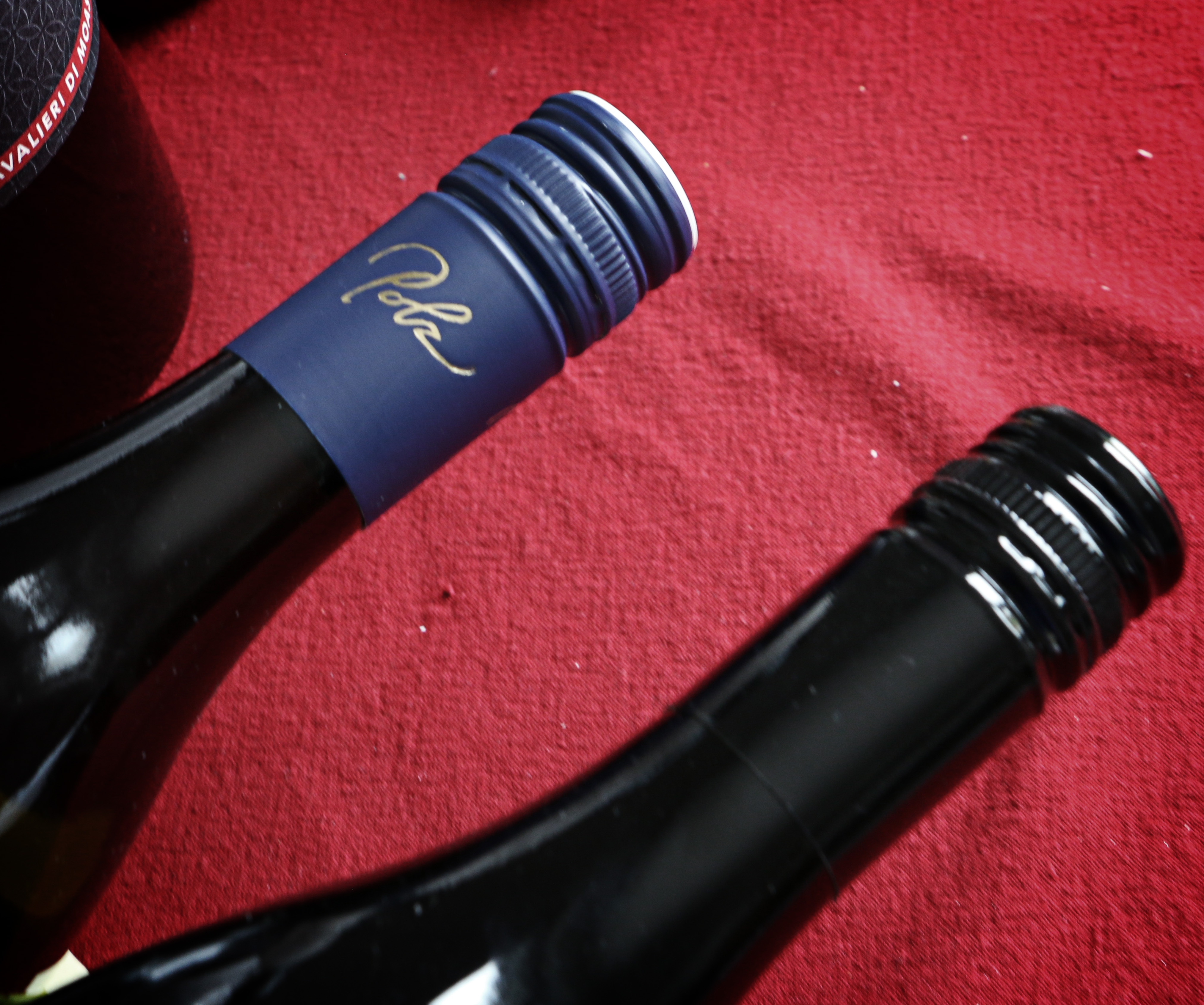
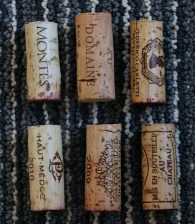 demanding of closures, bottles with cork closures must be stored on its side to prevent the cork from drying, shrinking and exposing the wine to damaging amounts of oxygen that would result in an oxidized wine.
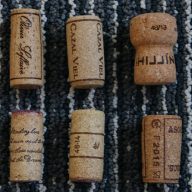 Agglomerate Corks: This is the cheapest form of cork stoppers. Agglomerate cork is made from cork dust and small bits of cork glued together and molded into a cork closure. In the photo below you can see agglomerated cork with natural cork discs on the top and bottom. This type of cork is also referred to as a 1+1 cork.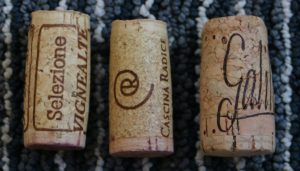


 The Vine and Thistle