
Just as all vines go into a slumber after harvest and through the winter season, you most likely have noticed our site has been dormant for the past few years. Adjusting to a move, new jobs and the arrival of our son shifted our focus for a while but we’re getting ready to share new stories and experiences with you. In addition to diving into Virginia wine and sampling the Finger Lakes region, we’ll also spend more time exploring the world of whiskey. We wish you a happy 2020 and hope you’ll join us this Spring for the reemergence of The Vine and Thistle!
Touring Tuscany and the Big 3
Now that Spring has arrived, my mind turns to thoughts of Tuscany. Whenever I am asked to single out my favorite place in Europe, it is sometimes hard to say as each country, city, and village are so unique. But then I go to Tuscany in my mind, and if there is a place in heaven for me I hope it resembles Tuscany. To me, Tuscany is heaven on earth…
There are few experiences that can compare to waking up on a cool spring morning in a beautifully restored Tuscan villa and looking outside to see the rolling hills of Chianti covered in rows of Sangiovese vines, olive and fruit trees. Sipping a cup of fresh brewed Lavazza d’Oro coffee, I look across some of the most beautiful country there is.
We are renting a villa with my wife’s family in the town of Bucine, right in the heart of the Chianti Classico region an hour south of Florence and 45 minutes north of Siena. Our villa’s foundations and stone walls date back to the 16th Century, as Marco says, a time when building materials were literally taken from the ground on which the villa was built. Marco’s family owns the villa and like the stones in the walls, was born of Chianti and Tuscany. The personal connection to the land is pervasive throughout many wine regions, but for some reason always seems more apparent in Tuscany.
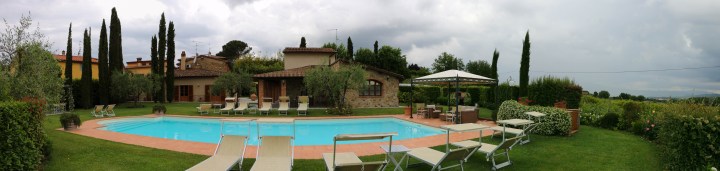
The day of our arrival, Francesco, the villa rental manager, and Marco tour the villa’s grounds with me. With aromas of honeysuckle, roses and flowering olive trees everywhere, we stop at the cherry tree loaded with ripe cherries. Anything on the property is ours for the taking, as Marco explains. We walk back past the chicken coop, whose seemingly happy hens cluck away. They will provide us with fresh eggs for breakfast throughout the week. The garden’s lettuce is also ready should we need any leaves for a fresh salad. The tomatoes betray a plentiful yield to come, but it is far too early in the season to enjoy. The same goes for the peppers and garlic. Lemons fall off the potted trees, which my father-in-law quickly turns into delicious lemonade. The whole experience is supremely relaxing; an almost sublime transition from the worries of a hectic and chaotic world.

Sangiovese begining to flower

Workers tend to the vines behind the villa.
We sat down that evening for incredible welcome feast of various crostini, local Italian charcuterie and cheeses, pasta al amatriciana, crispy roasted potatoes and fresh leafy salad served with roasted pork, all served with ubiquitous amounts of the villa’s own sangiovese. We finished with the creamiest tiramisu I’ve ever had. We talked, laughed, ate, drank and truly were merry.
As we retired for the night, my thoughts turned to the wine tour my wife and I organized for our family. In order to get a good sample of Tuscany’s wine region, we put together an itinerary to visit a winery in each of Italy’s “Big 3” wine regions. After three days touring Florence, Siena, Pisa, and Lucca it was time to highlight the wine masterpieces of Chianti Classico, Montepulciano, and Montalcino.
Our wine day started somewhat early as we arrived at Fèlsina, a winery in the Chianti Classico DOCG, for our 10:00 am tour and tasting. As we wandered the grounds in eager anticipation for our tour to begin, we were warmly greeted by Carlotta, our guide. Carlotta showed us through the barrel room, in a building built in the 18th century and connected to the cellars via underground tunnels excavated in the 19th Century.

We joined Felsina as the celebrated the 300th anniversary of the Chianti Classico DOCG

Félsina’s Barrel House
As the tour ended we were escorted into the comfortable enoteca where a tasting table for 12 was set for us. As we settled in, plates of charcuterie, cheeses and bread drizzled with Fèlsina’s own olive oil were brought to us in preparation for the tasting. We started with I Sistri, Fèlsina’s white wine made of 100% Chardonnay. It was crisp, fruity with only hints of butter, quite refreshing with excellent structure and balance, pairing well with the pecorino cheeses. Next we moved on to the Chianti Classico, followed by the Rancia, a Red Chianti Classico Riserva that takes its name from an old farmhouse that was once a Benedictine monastery. The Rancia was a deep red, full-bodied wine with good tannins spice, berries and even some floral and toasty notes. It was delicious with the Italian meats.
We departed Fèlsina with our case of wine and a few bottles of olive oil, and made our way to Montepulciano for a 12:30 tasting at Poliziano’s Enoteca on Montepulciano’s Piazza Grande. The route from Fèlsina to Motepulciano was winding, sometimes a little rough, but always beautiful, offering a small preview of the scenic hilltowns we would later see on the drive from Montepulciano to Montalcino.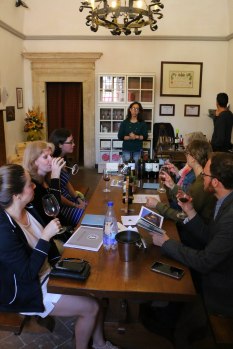 We were greeted at Poliziano’s Enoteca by Giulia who led us through a tasting of Poliziano’s fine selections. So as not to be rushed during our tasting, Giulia called ahead to the Osteria del Conte where we had lunch reservations to let them know we might be a little late. We were told there was no problem. Of course there was no problem, because time is such a relative thing in Italy. We continued to enjoy the Vino Nobile and the “Asinone,” named after the single plot where the sangiovese for the wine is grown and its resemblance to a “donkey’s belly” on a map. Of course the whole experience ended too quickly, but it was time to move on and the day held plenty more to savor. (Check out Azienda Agricola Poliziano here.)

The entry to Poliziano’s tasting room…

Departing Poliziano, we headed to Osteria del Conte in time for our 1:20 lunch reservations. Strolling across the Piazza Grande in front of the Palazzo Comunale (a building fans of the Twilight saga and the Netflix series, Medici: Masters of Florence, will quickly recognize) we take in the fresh air and medieval architecture freshly rinsed by a passing shower.
Arriving at Osteria del Conte we are greeted yet again with the warmest of hospitality that at this point seemed so routine in this slice of the world.Our table awaited and we all sat down for a delightful lunch of traditional Tuscan recipes. I start with assorted crostini with the commonly recognized bruschetta of diced tomatoes and drizzled olive oil, a melted local cheese, and the crostini de fegatini, a local liver paté that can be found throughout the region. I shared a bottle of Rosso di Montepulciano with family. Some in our party opted for the lamb chops, some for the pici pasta with ragu. 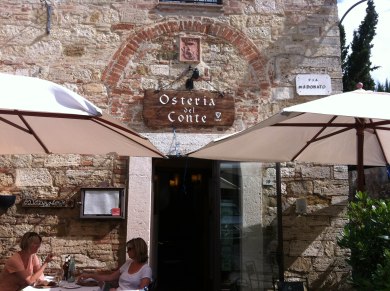 I chose the duck ragu and pici pasta. All the dishes brought to the table were presented simply; no flourishes, no fluff, just quality ingredients and plating. Tuscan cuisine constantly reminds that with quality ingredients and proper preparation, ornamental excess is completely unnecessary. At Osteria del Conte, the food is simple, affordable and absolutely delicious; the food speaks for itself. There was not a single disappointing dish anywhere on the table. (Check out Osteria del Conte here.) Again missing a passing downpour and with our bellies full, we head back to our cars, designated drivers ready to head to our last stop.
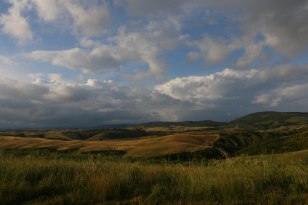
The drive from Montepulciano to Montalcino is beyond words. Breathtaking would be a good start in describing it, but that is not enough. Imagine every painting or postcard you have seen of the Tuscan countryside and the drive is a perpetual slideshow of those visions. Romantic hillside towns, rolling hills of wild flowers, wheat just transitioning from vibrant green to gold, olive trees and vines compliment the blue skies peaking through large, fluffy cumulus. One would expect hotels and villas everywhere in this paradise. But not even the slightest hint of urban sprawl could be seen, the result of Italian government regulation on development and seemingly sheer isolation. Occasionally you are brought back down to earth and reminded of the hard economic times in Italy. With old farmhouses for sale, empty or unfinished industrial sites and warehouses, you are left to wonder what the final straw was that forced its inhabitants to abandon such a locale. Occasionally there is the thriving marble or travertine quarry with large slabs stacked on lots in the shadow of the exposed hill faces from whence the inventory came.
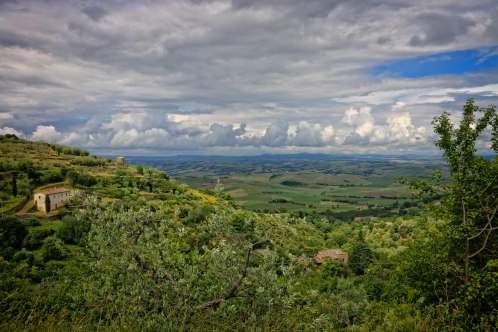
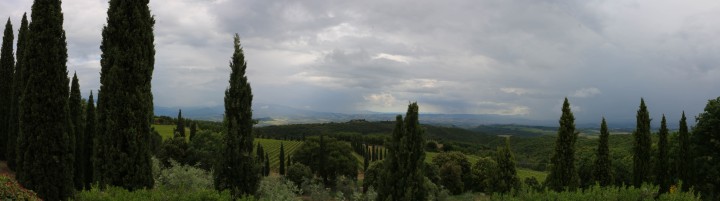
We wind through the hills gaining elevation as we approach Montalcino, the land of Brunello, king of Italian wines. After snapping some photos along the way, capturing whatever we could, we arrive at Poggio Antico just avoiding yet another spring shower. We have an appointment for a tour and tasting, and our guide Giulia warmly greets us with a big smile. Given time to refresh after our drive, we meander through the bottling room to reach the restrooms, both of which were impeccably clean. Poggio Antico served as an interesting contrast to our morning visit to Fèlsina which had a more traditional, old school feel to it compared to Poggio Antico’s greater incorporation of technology into its winemaking practices. Friendly and fun, Giulia starts our tour outdoors as it begins to rain. She shares the winery’s history with us and explains the unique elevation of Poggio Antico within Montalcino DOCG as we look over the vineyard, the Tyrrhenian Sea barely visible in the far distance beyond the hills. The elevation of around 1,480 feet and steady breezes play a key role in helping to keep the grapes free of moisture that would result in mold.
We move inside to the room housing the computer controlled fermentation tanks used to adjust temperature and ensure consistent temperature in the tanks. Continuing onward, we head to the cellars where the Brunello di Montalcino (100% Sangiovese) wines mature in Slavonian and French oak tonneaus and barriques for a period of 3-5 years before bottling and subsequent 18 months of bottle aging. As wine ages in the barrel, it slowly evaporates through the barrel, resulting in what is commonly referred to as the angels’ share.  At Poggio Antico, however, the angels are left wanting thanks to a humidification system that maintains a higher humidity in the barrel cellar, reducing the amount of wine that evaporates through the oak. When the wine moves on to bottling, the bottles are corked with 100% natural cork from Sardignia. After bottle aging is complete, 85% of Poggio Antico’s beautiful wines are sent around the globe. We head to the tasting room with Giulia to taste them ourselves. Some in our party opt for the tasting of six, allowing us a comprehensive taste of Poggio Antico’s Rosso di Montalcino, Brunello di Montalcino and the Riserva. Then there is Altero, Poggio Antico’s expression of the modern style of Brunello. Altero is aged for two years in new 500L French oak barrels and then further refined in the bottle for at least two years prior to release. Their Super Tuscans, Madre and Lemartine are so bold with delicious red and black fruits. There is no question these are big wine that needs a meal, but man is it good. (Check out Poggio Antico here.)
Entirely satisfied with a full day of wine, food and amazing experiences, we thank Giulia for the great hospitality and tour, pack up the cars with our bounty and head back to the villa.
The remaining days of our trip were spent relaxing and checking off more bucket list items. On our final evening Francesco made reservations for what easily (and by unanimous decision) became the best meal of our lives.
The Osteria at Fattoria di Rendola is a beautifully charming restaurant off the beaten path about 20 minutes outside of the town of Bucine. Our evening drive takes us down yet another scenic gravel road with vineyards and orchards in abundance.  We arrive just before sunset, snapping a few photos before heading inside, where we are greeted with big smiles and escorted to our table. Our table, much like the feast to come, is gargantuan and in our own private wing of the restaurant. This is rustic, traditional Tuscan food at its best; a fixed menu with few to no options and no thought required. First to arrive were plates of fresh bread, local cheeses and charcuterie with bottles of 2013 and 2014 Baldi Gianluca Chianti as well as still and sparkling water. Then came the platters of traditional bread “soups”, one being a warm Pappa al Pomodoro and the other a bread, cucumber and tomato. (Check out this Food & Wine Magazine Recipe for Pappa al Pomodoro here.) Next, as I suspected, was Trippa, or tripe. Now let me step away a second here; hands down, there are few things I like less than tripe. With that said, this was good, really good. Tripe in my past experience can be very chewy and sometime quite gamey when not prepared properly. These thinly sliced pieces of tripe, having been stewed for hours in a rich, delicious tomato sauce were tender and so tasty. This was what tripe was supposed to taste like.


Now that we were all stuffed, we were reminded we were nowhere near finished. The owner and server came to our table with three massive, beautiful bone-in Chianina steaks to show us what was to come. We drank more delicious wine and reflected on our experiences in Tuscany as the steaks were prepared. The chianina was served rare to mid-rare with potatoes and a leaf lettuce salad, all simply and perfectly seasoned. As we finished the meat course, conversation continued to flow and our plates were cleared. As our evening came to a close, we enjoyed cantucci (small Tuscan biscotti), Vin Santo, and coffee. We walked out of the restaurant to return to the villa completely satisfied. The service was excellent, and our meal of a lifetime had come to an end. Sadly, we knew, the next day so would our visit to Tuscany.
The family all awoke the next morning to enjoy a quick and simple breakfast with whatever we had left in the kitchen. Our hens had served us well, but no eggs were left that morning. We packed our cars, said our goodbyes and all left our little slice of heaven to head back to our busy lives, longing for the day we would return to Tuscany. –EZ
Merry Christmas and Happy Holidays!
Being back in the states for the holidays for the first time in five years, we’re excited to jump back into the family traditions we’ve missed for so long. Everyone’s holiday feasts are different, but no matter what is on the table, sharing a meal and spending time with family is part of what makes the holidays so special. For our family, Christmas Eve is a meatless observance of the traditional Polish Wigilia. Our feast begins with everyone breaking a wafer (called opłatek) and wishing each other well in the new year. After everyone is seated and grace is said, we feast on mushroom soup with potatoes, then fish, pierogi (both potato and cheese, and sauerkraut filled), beets, cabbage salad and finish it all with mountains of Christmas sweets and last but not least Krupnik, a honey liquor. For this Christmas Eve, I’m surprising my cousins who have been working tirelessly in the kitchen preparing the pierogi and fish. I’ve prepared a six-pack of wines to go with the feast. Here’s what we’re drinking:
- 2014 Landhaus Meyer, Grüner Veltliner, Lower Austria – Nice spiciness and acidity with some citrus/grapefruit with the peppery signature of Grüner Veltliner. Good with sauerkraut…
- 2014 Paolo Scavino, Langhe Bianco Sorriso, Langhe DOC, Italy – A blend of Chardonnay, Sauvignon and Viognier from Northern Italy along the Austrian border. A little floral and fruity.
- 2014 Erste + Neue, Müller Thurgau, Südtirol/Alto Adige DOC, Italy – Perfect for fish. Nice acidity with fresh fruitiness. From the beautiful region along the Italy-Austria border.
- 2014 Will M, Riesling Réserve, Alsace AOC, France – Crisp acidity with apple notes and some of the minerality typical of Alsatian whites.
- 2015 Loius Jadot, Pouilly-Fuissé AOC, France – As with all white Burgundy, this is 100% Chardonnay. Some peach, apple and floral notes with great acidity and some minerality.
- 2014 Ravines, Dry Riesling, Finger Lakes, NY – A wine we’re proud to put up against quality Old World Wines. Great minerality and fruitiness with crisp acidity.
Christmas Day is filled with Italian/Sicilian treats. My mother-in-law prepares a giant pot of sauce the day before with meatballs, Sicilian brasciole, chunks of pork chop and, wait for it… eggs. The hard-boiled eggs cooked in sauce are superbly delicious. The trick is cooking them just long enough to pick up the flavor but not become rubbery. For this feast I’ve selected a couple of bottles of Chianti Classico:
- 2013 Fèlsina, Berardenga Chianti Classico DOCG, Siena, Italy – A deep and fruity wine with some spice. Great aromas and nice tanins.
- 2011 Lamole di Lamole, Chianti Classico Riserva DOCG, Greve in Chianti, Italy – Another great Chianti, deep in color, rich fruitness with some herbal notes and nice tanins.
Wherever this holiday season finds you, and whatever holiday you will be celebrating, we wish you peace, joy and good wine! -EZ
Why Put a Cork In It?
Our friends and family frequently ask us, “Do screwtops indicate a wine is”cheap” or of lesser quality; why are there different corks; and how do you know if a wine is “corked?” So we’ve decided to look a little deeper into the issue but the bottom line is, no, screwtops alone do not indicate a wine is of lesser quality. There are many absolutely delcious wines that are sealed with screwtop closures. So let’s take a look at the variety of closures used and some of the factors that go into deciding which closure is appropriate. -EZ
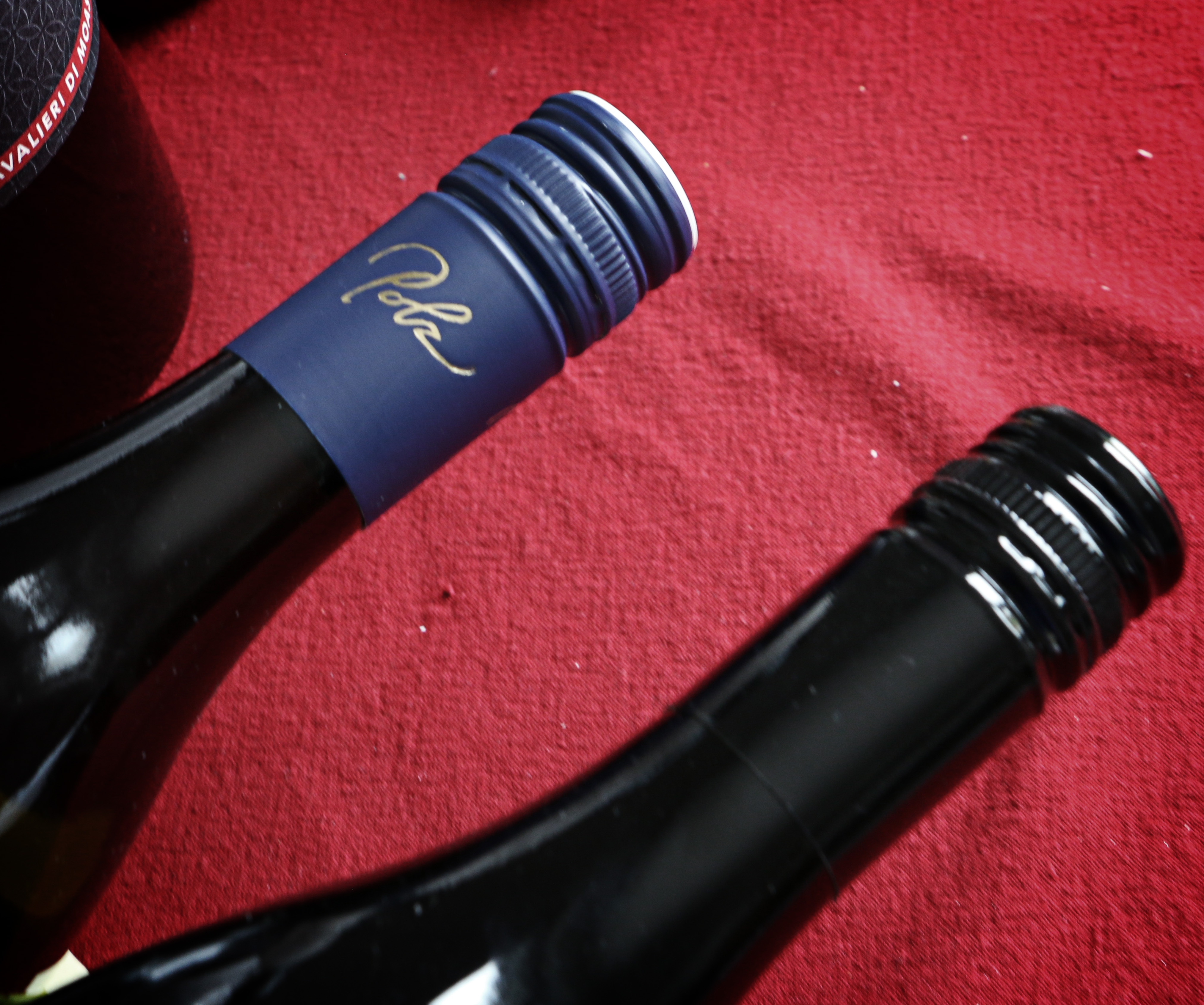 Screwtops, is there anything else in the wine world that inspires more discussion, judgement and misunderstanding than the sight of a screwtop? Well, okay, maybe boxed wine. Of all the winery tours and tastings we’ve been to, the debate of screw top closures vs. cork always comes up. Many winemakers and articles in wine and food magazines have fought to end the debate, but the fight continues regardless. It still appears that the preference for cork is deeply seated in tradition, pride and perception. It seems that no matter what the consensus or experience may demonstrate, in some regions, people just don’t want to see screwtops on their bottles yet. Winemakers have moved on to accepting screwtops for certain wines. In fact, Wine Spectator reported in 2008 that the Valpolicello winery Allegrini gave up its Valpolicella Classico DOC in order to use screwtops; however, it should be noted that I recently saw Allegrini Valpolicella Classico DOC, and no it did not have screwtops. Globally, we, the consumer, should also work to get over the perception that screwtops indicate only cheap or lower quality wines; it is just not the case. So why have many of the respected winemakers moved on to screwtop closures?
First, because cork introduces risk and higher cost to the winemaking process. Real cork (harvested from cork oak trees) costs more, about $0.50 to $1.00 per bottle. Cork, especially cork that is bleached or sanitized can be exposed to chemicals that create compounds known as trichloroanisols (TCA). TCAs create the moldy, wet cardboard or mildewy basement aromas and flavors that we recognize in a wine that is “corked.” While it is estimated only approximately 1% of high quality corks may taint wine with TCA, in 100,000 bottles of wine a 1% failure rate is substantial and that rate goes higher with lesser quality real cork. With so much competition in the wine market, it may only take one bad bottle for the consumer to choose a different bottle next time. While more advanced cork sanitation processes minimize the risk, it is understandable why a winemaker may look for alternatives.
Secondly many wines do not need cork closures. Cork closures allow small levels of oxygen into the bottle, albeit in seemingly negligible amounts. Over the course of years, as wines age this oxidation develops flavors and aromas in the wine. But not all wine is meant to be stored for many years. A wine with a higher pH (less acidity), lower alcohol %, and/or lesser tannins and structure simply cannot hold up to long storage. Therefore, the introduction of oxygen into the wine is not required, and in fact is unwanted. These wines are meant to be enjoyed young and do not need long storage. Another tell-tale sign that a wine is not meant to be stored for long is if it is bottled in a clear bottle. Light has many damaging effects on wine, effects that are minimized with brown or green glass. Either way, whether it be brown, green or white glass, wine should always be stored out out of direct sunlight. If clear glass is used, than it can be safely assumed that a screwtop closure is also sufficient, and the wine should be enjoyed within one to three years.
In addition to screwtops, winemakers have other closures to choose from as well. Below we’ll take a look at them. It is important to note that no matter what cork is used, wine bottles should always be stored on its side to ensure the cork remains moist. Should the cork dry out, wine can be exposed to bacteria or other harmful microorganisms, as well as excess levels of oxygen.
You may ask, “What do I do if I have a “corked” wine?” If you are at a good restaurant, the server or sommelier should recognize cork taint immediately and resolve the problem without issue. If the serve or sommelier (if one is present) does not, and you taste that signature mildewy/wet carboard taste, do not be afraid to bring it to the attention of your server. They should offer an alternative or different bottle. It should be noted that because you do not like the wine, does not mean the wine is faulty. If you buy a bottle and you open it at home only to find the wine is “corked,” you can take the bottle back to the wine store from where it was purchased and you may likely be offered replacement.
Real Corks: The majority of the world’s cork comes from Portugal and Spain. The most 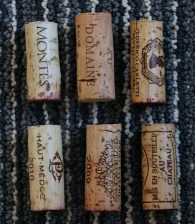 demanding of closures, bottles with cork closures must be stored on its side to prevent the cork from drying, shrinking and exposing the wine to damaging amounts of oxygen that would result in an oxidized wine.
Screwtops: A more affordable closure than cork stoppers and allows for zero air entry into the bottle. To reiterate, a screwtop closure alone is not an indicator of a lesser quality wine.
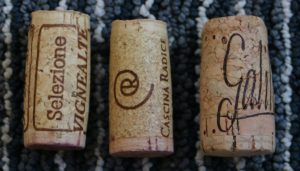
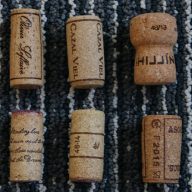 Agglomerate Corks: This is the cheapest form of cork stoppers. Agglomerate cork is made from cork dust and small bits of cork glued together and molded into a cork closure. In the photo below you can see agglomerated cork with natural cork discs on the top and bottom. This type of cork is also referred to as a 1+1 cork.
Sparkling Wine Corks: Have a wider base and are contained in the bottle by a cage to withstand the pressures within the bottle. As you can see in the picture the majority of the cork is agglomerated cork with natural cork disks 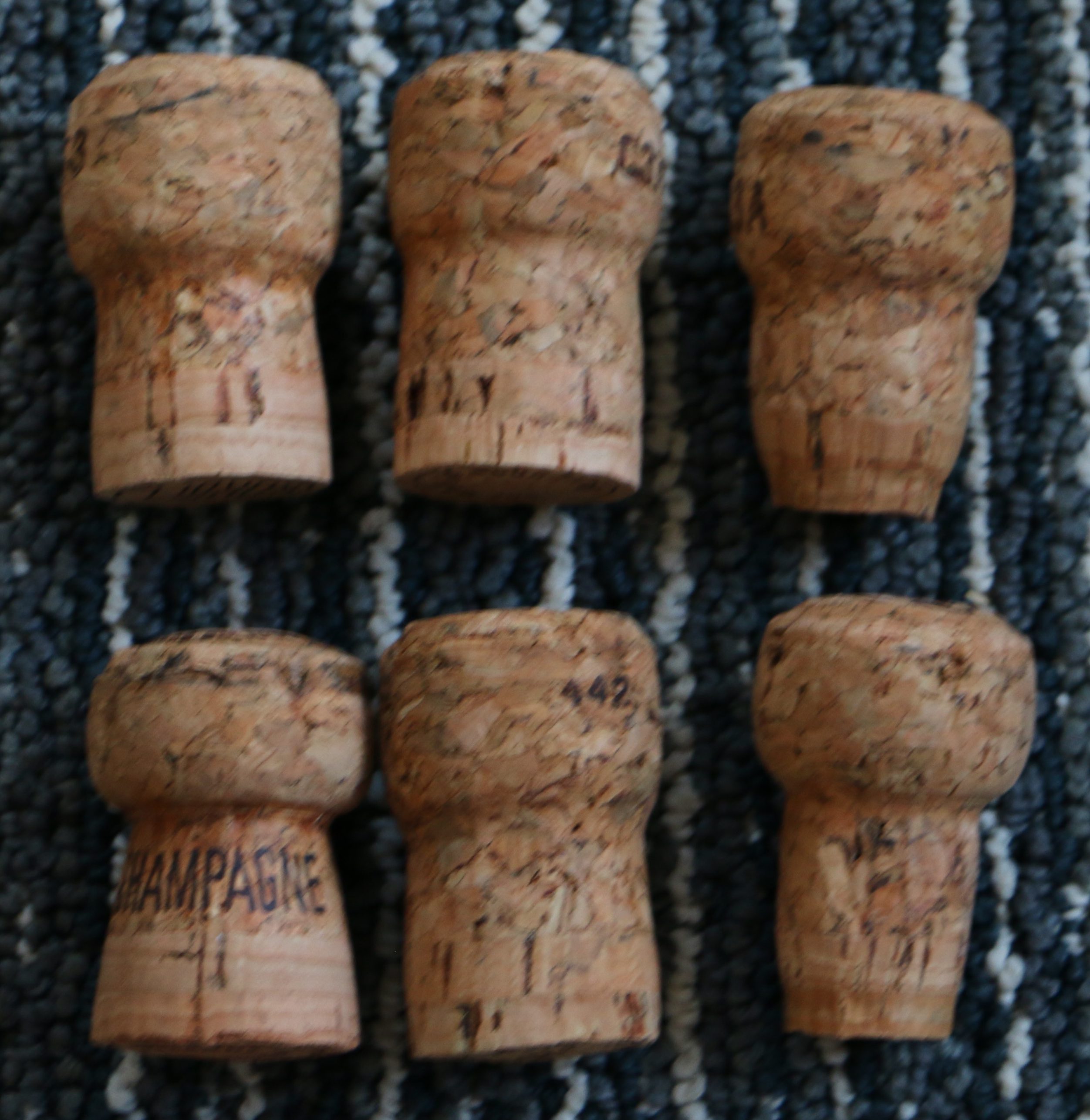 at the base. In traditional method or Méthod Champenoise sparkling wines, the cork is added after bottle fermentation (the process that makes the wine bubbly) is complete. Until that point some wineries simply use a bottle cap like those found on beer bottles or old glass soda bottles.
Colmated Corks: According to corksupply.com pre-washed natural corks are placed in a revolving drum and a food-grade approved adhesive agent is added. The corks are tumbled until the adhesive is evenly distributed around each cork, and natural cork dust is added to the drum. As the corks tumble, the mixture creates a film that coats the entire surface of each cork, effectively sealing and masking blemishes. After a brief settling period, the corks are tumbled again to remove excess dust.
Synthetic Corks: While there still seems to be some debate over the long-term effects of using synthetic cork (whether the plastics leach unwanted chemicals into the wine and/or if that affects the wine), many winemakers are turning to synthetic corks as more affordable alternative to real cork closures. We’ve typically only seen synthetic 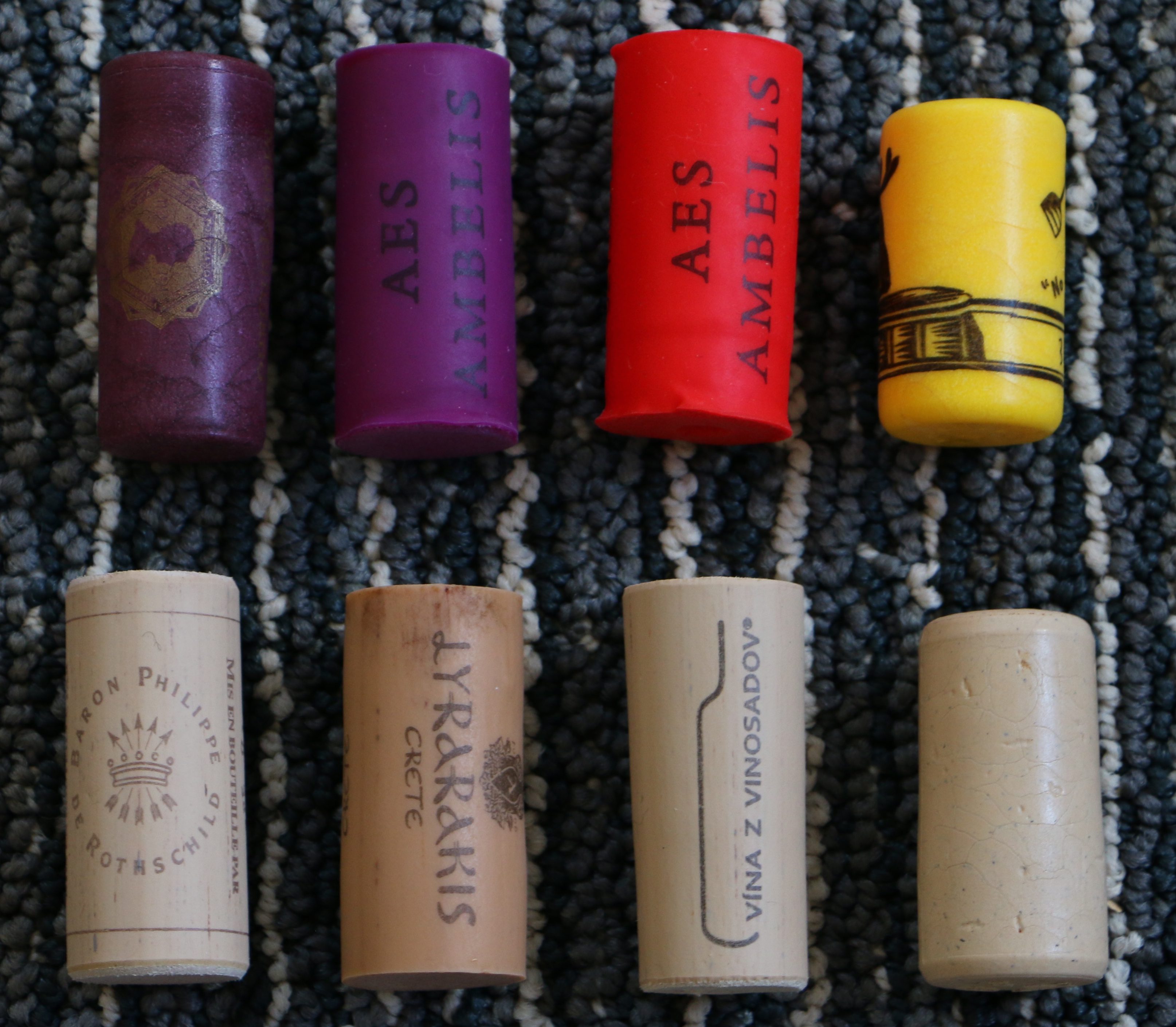 corks in wines that are not intended for long storage, but it will be interesting to see if more wineries begin to use synthetic corks for wines worthy of long term storage. Another benefit of synthetic cork is they are simplest to sanitize, do not absorb wine, but also do not dry out; preventing the wine from becoming oxidized when not stored on its side.
Whiskey Fundamentals Part I: Scotch, A Visit to Balvenie
Lepe’s back this week to start a series of posts on the fundamentals of whiskey. We hope you enjoy! – EZ
Whiskey Fundamentals Part I of IV.
So… you want to learn about Whisky, eh? Good, me too. In a previous post (A Very Personal Spirit) I talked about how each whisky is unique, its character brought about through simple ingredients (grain, water, yeast), time, and the distillers unique craft. However, I’d like to start with a basic primer on whisky; its basic ingredients, how it’s distilled, aged, and matured.
For this post, I’ll use Scotch as a point of reference. Scotch refers to whisky distilled in the traditional way in Scotland and aged for at least three years. I’ll get into the American distilling process in a follow-on post. The process is essentially the same as Scotch whisky, but the ingredients, distilling, and aging/maturing processes are a bit different.
A wee grain.
All whisky is made from grain. This could be corn, rye, wheat, barley or just about any other grain. Scotch is made from barley, malted barley to be precise. Malted barley, or just malt, is barley that has been allowed to partially sprout (also referred to as germination and pictured below). I’ll get into that bit in a minute, but first; a few words about barley. Barley is a cereal grain in the grass family with many varieties whose grains have been harvested since humans began to farm. Barley is even mentioned throughout the New and Old Testament! Every grain is a little bundle of starches that are chemically converted into maltose sugar during the malting process. It is this sugar that distillers need for fermentation into alcohol, to eventually distill into whisky.
Why this grain and not another? According to Tom Standage, author of An Edible History of Humanity, and A History of the World in 6 Glasses, the domestication and use of barley grains by early farmers was as much about availability, and the amount of sugar that barley produces, as it was about selecting the properties that made the grain desirable; among them is the ability to germinate at the same time under similar circumstances. In this sense, barley is very easy to control. David Mair, Balvenie’s distillery ambassador, walked me through the process. (Click here for a quick video tour provided by David at thebalvenie.com) First, the barley is soaked in water for about two days in vats like the one below. In the following picture you can see a close-up of the barley being poured in!


Soaking the barley activates the grain as rain would in nature, the water is drained, the grain is then spread out on the malting room floor and left to sprout.
While the barley is on the malting room floor it is turned over every few hours to keep the shoots from getting tangled up and to manage the temperature of the now malting grains. At Balvenie they do this by hand and with the help of a machine like the one shown below to the right.


This process can take several days and is very dependent on keeping environmental conditions at just the right temperature and humidity to maximize growth. During the malting process the growing shoot starts to consume the grain’s starch. In order for a distillery to maximize the yield of sugar produced from the malt it has to halt the process at its peak by drying out the now malted barley. That’s where the kiln comes in. If you have ever been to a distillery you will have undoubtedly seen a curious structure like the one below. That’s the kiln and it is where some bit of craft happens.
The barley taken from the malting room floor and spread out in the kiln to be dried by they heat of the fire in the lower part of the kiln. If peat is to be part of the mix to contribute its unique smoky flavors and aromas, it is here where it is introduced. However, the kiln’s fire must use a smokeless coal called anthracite. Using anthracite prevents unwanted odors from being absorbed by the damp malt. Below is a picture of the kiln’s fire (the malt, not pictured, is on a wooden surface far above).
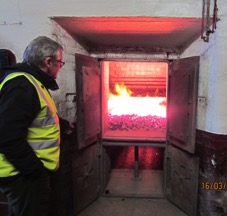
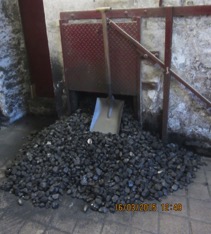
….and peat (below) is thrown into the fire in limited amount to help create Balvenie’s unique flavor. After a couple of days, the malt is removed from the kiln and ready for the next step in its journey, which we will describe in part 2! -JLLS
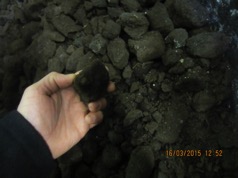
Random notes. If you ever wanted to learn about barley production worldwide, but were afraid to ask look up the U.S. Department of Agriculture website:
http://www.fas.usda.gov/commodities
Also, for more on the science behind malting and distilling the blog below is very helpful:
http://whiskyscience.blogspot.de/2015/03/scottish-whisky-mash-bill.html
** Whisky Fact: If you ever wondered where “single malt whisky” comes from, its whisky made from malted barley from a single distillery.
Last Minute Easter Party Wines
As winter has eased its grip, Easter and the beginning of Spring are finally here. Sometimes for those with demanding or unpredictable life/work schedules, advance planning for large holiday get-togethers can be quite a challenge. We’ve decided to host a last minute, quasi pot-luck Easter feast and with the help of 14 of our amazing friends, it’s going to be a great one. So if you’re still trying to decide what wine to serve with your family feast, let us try to help. Here’s what we’re planning.
For the variety of appetizers our friends are bringing, we’re going to open a couple of bottles of Prosecco. Since we don’t know exactly what tasty bites are coming our way, we’ve found that a nice dry Prosecco is versatile and can stand up to a variety of different flavors. You could certainly choose to serve a Crémant d’Alsace, or Champagne. Bottom line, in our opinion, bubbles are always great.
Our other friends are bringing an apple and feta salad with almond vinaigrette. To match the flavor profiles and acidity of both the apples and the vinaigrette, I think I’m going to bring out a Grüner Veltliner from Austria. A 2014 Josef Ehmoser Grüner Veltliner from Hohenberg, Austria will hopefully do the trick.
The Big Ham: For a taste of home we’re going to serve a 2014 Dr. Konstantin Frank Dry Riesling from the Finger Lakes. Riesling is incredible with a baked ham, but you can also opt for Gewürztraminer. As an experiment we’re also going to open a 2004 Domaine Le Conte des Floris Villafranchien. I want to see how the Grenache, Carignan and Syrah blend work with the ham. A Pinot Noir from Olivier Leflaive is on stand-by as well.
Lamb or Beef: If you’re serving a delicious roasted lamb instead of ham, go with a bolder, heavier bodied wine like a Zinfandel/Primitivo, or a Cabernet Sauvignon. Our friends are bringing the ham, and we’re also making braised beef. The Cabernet and Zinfandel would be great with the beef as well but we’re pulling an affordable and tasty 2010 Chateau Trois Moulins from Bordeaux.
Be sure to stop back this week as I update how our Easter meal went and if the wine pairings worked out as planned. If you try any of these pairings, let us know what you thought of them.
We wish all of you, your families and friends a happy Easter and a very happy Spring season! -EZ
A Very Personal Spirit
Our good friend Lepe, who you’ll see from time to time here, is passionate to learn more about and share his whiskey. You can usually find him navigating his way through a great whiskey collection. As Lepe says, we will discuss everything from the distillation process to how to “taste” whiskey. Please enjoy as he introduces to the Thistle half of The Vine and Thistle, and stay tuned for Lepe’s next post exploring the fundamentals of the whiskey making process. Thanks Lepe… -EZ
Whiskey. The name alone conjures a gallery of images from dangerous outlaws at a saloon before high noon to posh gentry in their libraries. It’s a drink that is as much misunderstood as it is enjoyed the world over. But for however complicated a whiskey’s nose or impression may be, its recipe is remarkably simple. For the most part, whiskey is made from three basic ingredients: water, some sort of grain (barley, wheat, rye, corn), and time in an oak barrel. What comes out however is a spirit so complex that two different people can taste the same dram yet their palates will paint a much different impression on the canvas of their mind.
To me, whiskey is indulgence and emotion. A swig of Old Overholt still takes me back to the dust and Old West kitsch of the Crystal Palace saloon in Tombstone, Arizona, where the bar promises good whiskeys and tolerable water. A very generous 40 year-old cask strength dram from an exclusive Member’s Cask at Balvenie put me back in my grandfather’s musty, leather-bound library, as I slowly drank in his memory. A 12-year single malt Old Pulteney took me back to the Samuel Pepys pub in Huntingdon, Cambridgeshire, where I can still hear the raindrops lightly beating down against the window as I sit comfortably over a rarebit and sirloin burger in my favorite booth.
American poet and naturalist Diane Ackerman writes in A Natural History of Love, that love is like a beam of white light. When split by a prism the colors that are the emotions in the visible spectrum reveal themselves. Learning to appreciate a good whiskey is like splitting visible light. There is complexity, beauty and depth in what others overlook and take for granted. The quest of finding your own personal whiskey will hopefully stir you to action and set forth unto the world to make new memories, relive old ones, and experience the goodness of life. Yes, it can be that good.
Beware though, like most trips of personal discovery, they can be wrought with some disappointment as is the fate, in my opinion, of a number of blended whiskies that scrape the mind with a rake. Johnnie Walker Black reminds me of every other hotel or airport bar in the Middle East and Africa. Chivas Regal mixed with Coca-Cola was the drink of choice of discerning high school students in Tijuana in the early ‘90s. The thought makes me cringe, and let’s face it, other than Margarita Carmen Cansino and the Caesar Salad, not much else of any enduring value has come from Tijuana. In case you were wondering, Margarita was “discovered” in the early 1930s at the Caliente Club by the head of Fox films and was later to be known as Rita Hayworth: dancer, screen legend, and pin-up icon of WWII…maybe I will give the Walkers and Chivas another shot; who knows what I’ll discover?
I truly enjoy learning, savoring and discovering whiskey, as I am sure you do as well, or at least want to. These posts are for those who live for the adventure of travel, history, good food, great whiskey, and esprit de corps! So come by often, pour yourself a dram and stay awhile; you will always be welcome at our table. -Lepe
Wine Fundamentals: The Process
So we’ve recently shared how and why we became fascinated with wine, now let’s talk about the fundamentals of wine itself and how a grape goes from a “happy little grape” (to channel the late Bob Ross), to that glorious nectar we all know as wine.
To oversimplify, wine is fermented grape juice. Yeast converts the sugars in grape juice into alcohol and carbon dioxide. That’s it, right? Well, not quite.
Good wine is the end product of a long, arduous process of growing and maintaining vines, selecting the best fruit from those vines for harvest at just the right moment, separating the grape berries from the stems, crushing/pressing to extract the juice, fermenting the juice in a controlled environment, stopping the fermentation, stabilizing the wine or aging the wine in barrels or tanks for some time, clarifying or filtering the wine, bottling the wine, and stabilizing again in bottles. Then and only then is it sent to the consumer through distributors. Depending on the style of wine, every step of this oversimplified process can and is modified to meet the winemaker’s desired goal. Not so simple anymore right?

Fruit Selection / Harvest. To make the most affordable wines and maximize output, some wineries use all of their grape yield (those without significant defect of course, or at least one would hope). Wineries making higher quality wines or wineries in regions with government controlled quality mandates, choose or are actually required to select only the best grapes in their winemaking. For example, a winery crafting Brunello di Montalcino will return many of the grape clusters back to the earth by “green pruning” less than ideal fruit. For Brunello di Montalcino, only around 68 percent of the fruit is selected to make their wine. The quantity of wine produced is lower but the quality is higher. As a result, the price of the wine is generally much higher. We’ll discuss other factors that contribute to pricing of wines at a later date.
The Crush: White vs Red Wine. White wine is primarily made from white grapes but can also be made from red grapes. The color of the wine comes from the skins of the grapes. When a red grape such as Pinot Noir, Zinfandel or Tempranillo is crushed and the juice is not left in contact with the skins, the juice will remain white. A Champagne Blanc de Noirs (pronounced blahnc-de-NWAHR, literally translated as “white of blacks”) is also made in this fashion. Red wine, on the other hand, comes only from red grapes.
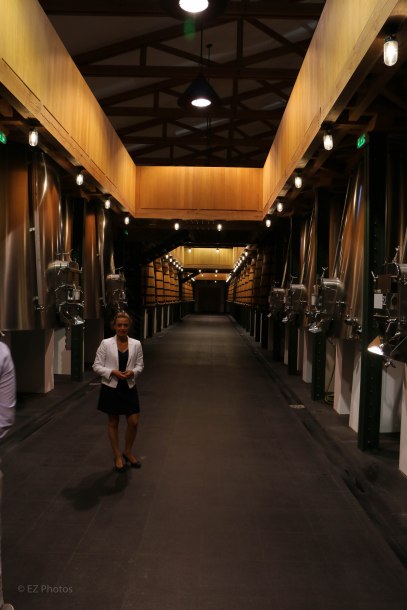
Fermentation. Yeast is added to the juice to begin the fermentation process. In red wines the juice is left in contact with the grape skins to macerate during fermentation to acquire the winemaker’s desired depth of color, flavor, aroma, and tannin structure. As wine ferments, the skins, pulp and seeds rise to the top of the vat and form a hard “cap”. Pumping over (remontage in French) is a process whereby the juice from the bottom of the fermentation tank is pumped over the top of the cap to increase the wine’s contact with the skins. Alternately, winemakers may choose to “punch down” the cap rather than pump-over. These processes are typically done multiple times a day. Check out this Wine Spectator video to see both processes in action: Hard Labor: Punch Down vs. Pumping Over.
To also help visualize, imagine a French Press coffee maker. When you add water to the coffee, the grounds rise to the top and form a “cap” of grounds. When you press the coffee you are essentially “punching down” the grounds. Stepping away from the analogy, winemakers may choose to punch down wines to extract stronger tannins and flavor structures as it is a more forceful process. Pumping over is a gentler process and generally used for thicker skinned grapes like Cabernet Sauvignon.
Aging/Maturing. After fermentation, the winemaker may transfer the wine to a different vessel such as oak barrels to begin the aging process. Sometimes during the aging process, the winemaker may choose to allow a secondary fermentation. This secondary fermentation can be used to convert the wine’s harsher malic acid (which you may taste as green apple), to softer lactic acid (which you may taste or smell as buttery or creamy notes). This process, called malolactic fermentation (MLF), is a biochemical process carried out by bacteria and also happens to be one of every wine nerd’s (to include this wine nerd’s) favorite buzzwords. You’ll likely hear this term at 4 out of 5 wine tastings.

In the case of Champagne or other sparkling wines that use the “Méthode Champenoise” (the traditional sparkling wine method used in Champagne), a secondary fermentation takes place in the bottle, making the sparkling wine, well, bubbly!
Barrels. For barrels, winemakers choose between numerous types of oak; French, Hungarian, Slovenian, or American. They decide, or governmental rules dictate, whether new or old oak barrels will be used. Then the winemaker decides whether he or she wants a barrel with dark, medium plus, medium or light toast. The toast level refers to the amount the barrel is fired. The type, age, and toast levels of the oak barrels determine the intensity of the secondary aromas and flavors such as vanilla, marshmallows, toast, cream, caramel, smoke, spice or oaky notes. New barrels impart stronger oaky notes and tannins. Older barrels (those used for a previous vintage) impart less intensity.

Bottling. After all fermentation is complete and the wine has been aged as appropriate, the wines are blended, clarified or filtered, and prepared for bottling. Winemakers or, again, governmental rules dictate what type of bottles will be used and what type of closure will be used; cork in all its natural or artificial varieties or screwtop closures. The wine is then left to stabilize for a certain time and then labeled and sent for distribution and sale. Phew…

It may be hard to believe but I’ve still generalized this process…a lot! So please stop back as we examine specific wines and regions in more detail. Winemaking is a long, challenging process with so many variables and decisions to be made along the way. How can you not appreciate it and want to learn more? -EZ
Sources:
- Wikipedia, “Malolactic fermentation”
- Kolpan, Steven, Brian H. Smith and Michael A. Weiss. Exploring Wine: Completely Revised Third Edition, The Culinary Institute of America, New Jersey: John Wiley and Sons, 2010.
- Puckette, Madeline and Justin Hammack. Wine Folly: The Essential Guide to Wine, New York: Penguin Random House, 2015.
- Wine Spectator: Hard Labor 7: Punchdown vs.Pumpover https://www.youtube.com/watch?v=GG7XpBpF1cY
This Wine Journey’s Origin
For as long as I can remember, food and cooking have been a passion of mine. All the way back to age 7 when I almost set the kitchen on fire while attempting a Bananas Foster (with adult supervision of course). And then in my early 20’s I met wine. My relationship with wine was never bingeful, but one of respect and curiosity. If we wanted to throw ’em back at a college party with friends, well we had beer for that. Wine had an air about it that seemed to demand a certain level of respect.
Although, like many who walk into a wine store, I felt challenged and overwhelmed. A visit to the wine store would always result in me leaving with my usual go-to’s like Beringer White Zinfandel or a cheap California Chardonnay. Steak on the grill? Estancia Pinot Noir. Now I am not saying that any of these are bad wines, they just literally were the only ones I drank or knew anything about. Everything else was a mystery, in my mind, reserved for those with gravitas and sophistication. The “wine snob” in other words, or so I thought. But you don’t have to be a snob to enjoy, appreciate and learn more about wine.
I came to realize that learning more about and truly growing to appreciate wine would be a journey. As I started to explore, I began to learn certain wines would go great with certain foods, but I still hadn’t the faintest idea what the hell Sangiovese was, much less a Gewurztra-what?? The handy “red-with-meat, white-with-fish magnet” on the fridge was my guide. Man would I be in for many surprises. As an aside, my dad is a big fan of Gewurtztraminer, but his efforts to pronounce it makes the both of us laugh every time!
Nobody is born an expert, and my passion for wine was born out of curiosity and a willingness to start learning more about the breadth and depth of wine at a shop tucked away in a then-quiet corner of Northern Virginia. In 2006 Jackie and I stumbled upon our place at The Curious Grape, a wine store in Shirlington, Virginia, just outside of Washington, DC. It was there that we found the compass we needed to explore the world of wine. At first somewhat intimidating, that cozy and oh-so-friendly shop became an escape, a challenge, and a comfortable academy of wine all wrapped into one of the most welcoming and unpretentious shops one could ever imagine. It showed us that you can enjoy and learn about wine without the snobbery.
“The Grape”, as we called it, offered tastings of wines I had never heard of, seminars with wine and cheeses from regions in Europe I had only dreamed of one day visiting. Each subsequent visit revealed to me what I had really wanted in wine; a culinary adventure. I was completely fascinated with it all. I still am fascinated. Sadly our favorite little store is no longer there, but The Grape inspired us and formed my philosophy on wine: make wine approachable and make it an experience.
There is no such thing as a dumb question, there is not always a “right answer,” and everyone tastes wine differently. It’s hard to see, smell, sip and savor your wine when one’s nose is turned up at others, right?
Wine truly is an experience for everyone to enjoy. A bottle of wine can transport you, whether it be flying economy to Italy with an affordable but delicious Chianti Riserva or Montepulciano, or cruising in a G650 to Bordeaux with a Château Lafite Rothschild, Petrus, or Chateau Margaux. (Okay, so I’ve never flown in a G650, or had the chance to enjoy a Petrus but please bear with the metaphor.) The aromas and flavors harnessed in each bottle take you right to that bottle’s birthplace. Wine can also be a time machine. It can take you to back to your first date, holidays and gatherings with family, your wedding, honeymoon or anniversary and everything in between.
Each bottle has a story to tell. It is filled with the heart of the winemaker and the soul of the terroir, or the natural environment in which the grapes are grown. It is the end product of a backbreaking work, art, science, luck, and whatever Mother Nature can throw at the vines that growing season. With so much in each bottle, I argue there is no room for pretense in wine, only respect.
So it is with respect that we continue our journey. Thank you again for visiting our site, and we hope to be a part of your wine journey. If after reading this you have questions, please send them our way. Let us know what you’re interested in and how we can help as you explore wine, whiskey and food. -EZ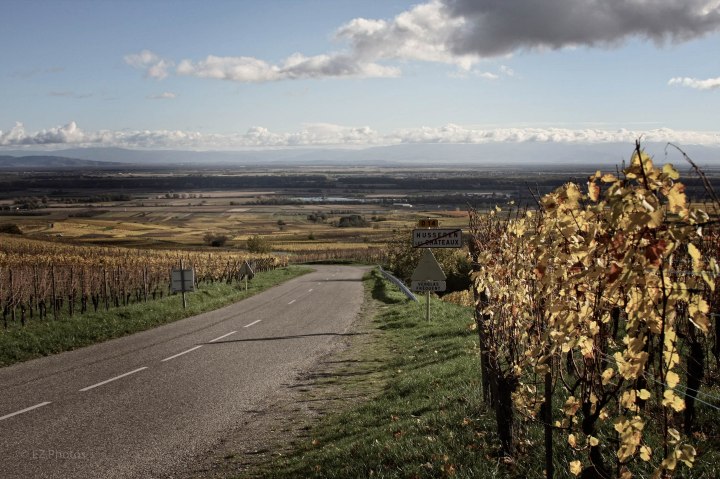
Welcome to The Vine and Thistle
Welcome to The Vine and Thistle! My name is Ethan, and I must admit I’m a little nervous in writing this first post. As I sit here on the couch with my beautiful wife, Jackie, we embark on what we both consider the first step toward making a dream of ours a reality. That is, to share our love of wine and food with all who would sit at our table, albeit a virtual one for now.
With The Vine and Thistle, I want to open the world of wine to our guests, especially those just starting on their own journey. I want to learn from and educate others. We’ll discuss the language of wine, explore the wine regions of the world, share our favorite gadgets, as well as our favorite sites and sources for more information on all things wine. We want to answer your wine-related questions, whatever they may be.
With the help of our good friends we will also bring you into the world of whiskey, the “Thistle” element of The Vine and Thistle. Venturing into the world of these spirits and developing an appreciation for them are very recent things for us. The thought of pairing food with whiskey was crazy to me at one point. Only recently did I discover that this is not the case. We’ve found whiskey to be just as rewarding as our adventures in wine.
We love hosting wine tastings and multi-course wine pairing dinners in our home, and we try to demonstrate the magic that wine and food can make when paired together. In the process, sometimes we end up discovering with our guests how a certain wine doesn’t work. We also try to burst our guests’ preconceptions and challenge their palates. I’ve always enjoyed finding the white wine-only drinker and exposing them to a red paired with food, only to discover they love it; a proud moment indeed. We hope to inspire you to do the same. We’ll also share some tasting and menu tips on our site to help you share a special evening with your friends.
Having lived in Europe for the past five years, we have been fortunate to travel to many of the most celebrated wine regions in Europe; Bordeaux, Alsace, Bourgogne (Burgundy), Côtes du Rhône, Provence, Chianti, Alto Adige, Valpolicella, and Tuscany to name more than a few. My dream is to share these experiences with you, so that you too can discover how amazing wine can be. If you can only dream of venturing to Italy or France one day, or if you have been fortunate enough to visit for yourself, we want to take you back through wine and food.
Wherever this site may find you, we hope to make wine and whiskey more approachable, and you more a more confident wine fan. While we may not physically have room for you at our table right now, you’re always welcome at our site. Hopefully one day we will fulfill our dream and then be able to invite you to a physical table to share in our journey. So once again, thank you for stopping by, check in often, send us your questions and please feel free to let us know what you think. Enjoy! -EZ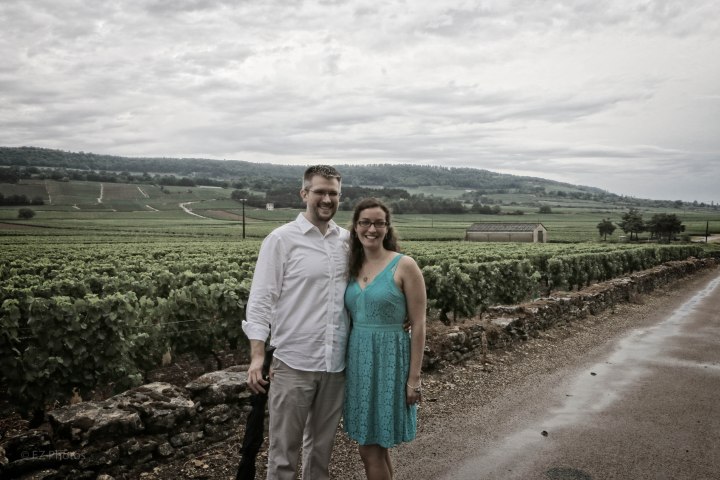
 The Vine and Thistle